Showing posts with label The Collective. Show all posts

Tuesday, April 22, 2014

The Care of Aging Parents: Making the Last Laps Rich (Part I)

This post is Part I of a 2 part series.  It precludes the practical detail of the action of mindful caring for our elders.

We are all born.  We all die.  And almost all of us have elders to consider as we ourselves age.  Without exception, that complex relationship, has its ups and downs (as well as karmic complications) through the relationship's continuum, and inevitably impacts our intentions to our aging loved ones.

At a certain point in a person's life, decision-making is necessarily abdicated due to advanced age or infirmity.  The decisions regarding the circumstances as to how their life will run its course is left to others:  adult children/family or institutions.  As adult children of aging parents, how do we consider what our relationship will be to our loved one's last laps?

For some, its a "no-brainer"; their parents have put into motion through long care term insurance purchase, or moving into an elder community that sees to the layered needs of the aging, or specifically voiced to their family how they would like to live the last years or decades of their life.  For these adult children, it's about follow through, respectfully adhering to their parent's wishes.  Even this ideal scenario is complex.  Possibly the adult children are not in a position physically, geographically or financially to honor these wishes.  Perhaps the aging community chosen is not so ideal, needs to be monitored on a regular basis.  Whatever the arrangement planned, the adult child's committed engagement is required, therefore, altering many aspects of their own independence.  Becoming clear to one's boundaries, capacity and level of commitment is essential.  Setting an intention that corresponds to the relationship you seek to create or maintain with the elder in your life is also required.


Many people claim there is a natural unfolding of this process, everyone involved takes their place.  Why make an intention if this is so?  Making an intention clarifies what you wish for in this relationship, shores-up the commitment with more of oneself.  The expected journey is long; challenges to the healing of a relationship, guaranteed.  An intention keeps us close to ourselves, and what we hope for, especially when the going gets rough and we question the endeavor.

Making an intention opens the field.  The field being one's perception, one's sixth sense.  It's possibly a growing up of the soul, an internal awareness of oneself and other.  It's a path of deepening oneself and one's possibility.  All the facts of the circumstance take a minor role and the relationship rises to the surface of prominent importance.  This is healing.  A possible healing of karma for those engaged and definitely a healing of what has been hard in the relationship.

With an intention, this is practically guaranteed.  How can I say this?  Because with an intention and a commitment to this journey comes a letting go of all that ultimately does not matter.  Whereas the details and circumstances are important, they are very secondary to what is shared. The cream rises to the top, a softening of oneself allows for perception to descend into parts of our self we didn't know we had.  This changes everything.  It also allows there to be this type of change in another.  If we only hold on to the details, the specifics, schedules and external needs-- and only allow that to run this lap, we miss the opportunity the  initial vow or intention created for us.

An intention might start with questions:  What percentage of my time do I want (not necessarily can) to spend with my parent?  With my parent's life affairs? What are aspects of our relationship that are  asking to be healed, would I like transformed? What are the grudges, resentments and hard parts we share?  How can I forgive?  How can I ask for forgiveness?  How much hands-on caretaking do I want to do (again, not necessarily can do)?  What is the necessary sacrifice on my part to do what I think I want to do?  Can I do this?  Can I get help with it?  All these questions are treated as an open inquiry.  Nothing is answered in a hard/fast, black/white way (at this point).  It's a beginning in fleshing out the feeling aspect of the proposed journey.  The decision-problem solving aspect of myself shouldn't jump in at this point, there will be plenty of time for that part to act.  In intention setting, its about allowing breath to enter the feeling center to create some room.

In this place of relationship a trust in something else besides the external occurs.  An adult child's anxiety and worry over the external details, the finances, the medical complications is background material.  It is almost always there, but for the most part doesn't take over our lives because the relationship's intention has helped us make it primary.  The connection, the vibration shared, the meeting and the healing is at the center.

Making the last laps rich, even under challenging and difficult circumstances is possible when this intention is in place.  Intention runs my actions.  I lose it, I return to it, I lose it again, but it is at the heart of what I want for my loved one and myself and steers me in the critical moments.  Our time, our financial resources, our individual direction; taking this on complicates our lives a little (or a lot) more.  Much like people making the lifelong decision to raise children.

In this journey we make, while there are hurdles, there is also a satisfying ride, a relaxing into the sublime elements of being connected to oneself and another more fully, an allowance of a natural unfolding.  Witnessing the external decline of another, whether mental or physical, isn't what you were afraid it would be.  The other's hallucinations, disorientation, good/bad pain days are experienced in a different way as this more subtle relationship is taken on.  The distinct impression of seeing our loved one with one foot in one world and the other foot in another more opaque world is touching and awe-inspiring. We see more of each other, a broader spectrum beyond personality and that is gratitude personified.  It is in this healing relationship one feels one's fortune; and it is reflected back from our loved one, having been shared.

I bring up intention in this first part, because it must precede the nuts/bolts and problem solving of the circumstantial details.  Otherwise, the external drives our actions, not the intention.

Friday, August 16, 2013

The Edge

photo credit:  Cornel Pufan

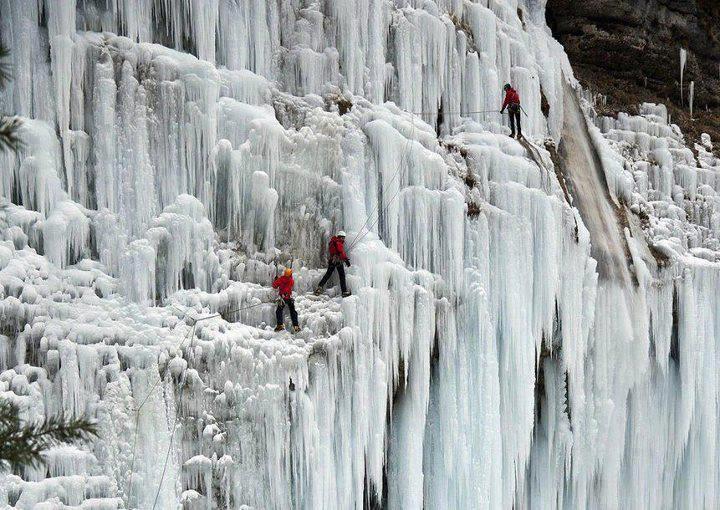
As we move through our continuums, even on a daily basis, we come into contact with personal edges.  Energetic edges happen when a vibration becomes a challenge in us, usually brought on by ambivalence, two opposites occurring at once, or a deep seated fear or challenge to a belief system.  Often, one or two aspects of our self meets this “crisis” and more often than not, there is no reconciliation factor to transform the edge.  A common example could be, our physicality reaches an edge (ie: exhaustion) and the mind and or the heart meet it (with “I can’t go on.” or “I must go on.”).  The edge is tenuous, it could go either way depending on the supporting/non-supporting aspects.  A strong motivated mind or emotion could be the factor that gets us past the physical edge.  And a non-committal or unengaged mental or emotional stance will do otherwise.  Another example could be a fatigued mind can’t get through a mental problem it faces, and the emotional center of ourselves is of no help as it despised the problem to begin with and the body, weakened by the mind’s momentary fatigue collapses as well.

photo credit:  Michael Karcz
We don’t recognize our edges.  They are uncomfortable and frequently downright scary (as said, they often are a challenge to a deep seated belief).  A common response to meeting an unconscious edge in ourselves is to get reactive, confused and ultimately turn away from the friction (vibration) created.  So the edge remains latent in us until the next surfacing. 

The power of edges is of course the energy generated there.  The transformation of an edge is the awareness we are there and the courage not to turn away.

Like most things of importance, meeting and transforming an edge takes practice.  We have to come up to it and turn away umpteen times, priming an inner awareness of it.  Breaking that cycle (because it occurs so frequently with a particular edge) is an exercise of patience for an inner life.  Knowing I ultimately have to bring other aspects of myself to the edge besides the one that gets me there is useful.

So, I start out doing an “impossible” task, one I’ve never done, have no familiarity or seeming aptitude for and hence feel supremely uncomfortable in the approach.  It’s a task I have never attempted out of decades of deep seated fear and layers of complex beliefs.  But, my mind knows it has to be done, there is no not doing it.  My body is sort of curious about this new never-been-done-before quest and is somewhat willing because it is supported by the determined mind.  The emotional center of myself is fully crazed about the prospect, has dug in her heels and can be heard whining about it almost constantly, nay-saying and dooms-daying as we start to move through the steps of the task.  Normally, all the ruckus the emotions create would stop the rest of me in my tracks.  But the methodical mind is on a roll.  And wisely, she hasn’t taken her usual imperious stance, dominating the rest of me.  She takes a wise-parent approach and this makes all the difference.  She keeps moving forward doing the laid out steps (with the help of the able and curious body), while cajoling the emotional part.  “We’re just going to do this for three hours today, it might be sort of fun. We’ll make no determinations, we’re just trying an experiment.”  

photo credit: Sterni
The three hours experience could be likened to dragging a full cart with no wheels.  It is like a flailing child on my left hip, causing me to do a sort of Igor/Frankenstein walk, dragging this besides-herself-little-one clinging, kicking and screaming.  There is a general feeling of supreme discomfort, even pain.  Confusion sets in in increments and I have an impression of being on the deck of a boat on a rolling ocean. Something in me knows the confusions and overwhelm are part and parcel of the effort and not to spend too much time trying to unravel them. Parts of myself are internally cowering, pretending they are stupid and don’t know anything.  This “I don’t know anything!” drama I find is actually helpful; my past indoctrination says, when you are a rank novice at something, mistakes are allowed, mercy is shown, the boom doesn’t get lowered.  Wow! It’s ok not to know. 

The three hours are up, I pack ‘us’ into the car.  There is a visceral sensation I am all in pieces, kind of shredded, and the main impression I have of myself.  I do a lot of inner cooing and reassuring on the way home, actually talking aloud:  “Ok. THATS over.  We’re done for the day, on our way home now.  We did great! We’ll have some nice tea when we get there and take the rest of the day off.  We won’t think or do anything else about this for now.”  Something in me is dutiful to this; faintly tempted to consider doing some thinking work on the process, she just lets it go.  There would be time for this action in awhile when most of me was feeling more settled, less shredded.

photo credit:  Barbara Corvine
There are a lot of edges in this.  Not only the ‘impossible’ task at the center, but experiencing the emotional dramas of the small child that still lives and her bounty of extreme impressions and reactions.  Also, the benevolent parent who somehow doesn’t marginalize the wailing child, but just keeps moving forward with a type of empathy for the fear-ridden.  That there were beginnings, middles and definite ends in the steps was enormously helpful; it provided lampposts (a short term goal) to get to and complete.  The practice of doing this exercise multiple times was great for the whole, because they all came to know it was survivable.  We would get through this, we did it before.  Each time, a new step became a bit more detailed and “serious”.  Each time newish terrors would surface, the intimidation factor would become more heightened.  And each time the benevolent parent would rise to the occasion, “It’s ok. We can do this.  It is terrifying.  We’re in this together.”

Part of meeting and transforming this edge was not getting bogged down in the smokescreens other parts of the self would create (the usual “turn away” factor).  They were noted, sometimes momentarily overwhelming, but not distracting enough to derail the intention set.  The presence of someone compassionate and benevolent, not willing to annihilate the ruckus-causing parts for her own purposes was also very unifying.  A sense even the disruptive have a place in the process, a voice to be recognized, a value-- significantly diffuses the power of the ensuing polarized anarchy. It was a joint effort, no Lone Ranger in sight.

Possibly, the transformation of an edge is a rite of passage.  There is no doubt it is entering a crucible of sorts; there is a combustible incineration process, pain and suffering is guaranteed.  But the sense of liberation and the infusion of a clear, bright energy once one has stepped through that door is an experience of tasting the magnificence of being Alive.  Once done, the possibility of navigating the course of an edge undeniably exists. It is also gives a perspective that illusions abound and confirms I may be living much of my life behind a veil.


Wednesday, January 16, 2013

Shared History

“The cosmos is within us, we’re made of star stuff.  We are a way for the cosmos to know itself.” --Carl Sagan

We have a profoundly deep relationship with the cosmos we inhabit.  Literally.  It is a 3.5 billion year shared history, a mutuality, a related existence, a symbiotic occupation.  Our DNA, cells, organs have a relationship with fish and pools of algae, as well as rocks, and are related to the grand "othernesses" of the cosmos at large.  These 'outer' thing's stories are our own brilliant truths.  The things that shape our bodies are the things that have shaped this planet and the entire universe.

Farish Jenkins and Neil Shubin, decades-long colleagues, explored the zoologist and paleontologist/ evolutionary biologist's point of view in finding the relationship to our ancestors (the fish and rocks).  As they have found, we have a shared history. "The sun burns hydrogen. Others stars burn oxygen and carbon.  The fundamental atoms that make our hands, feet, and brains serve as the fuel for stars.  It isn't merely the atoms in our bodies that extend across the far reaches of the universe: molecules that make our bodies are found in space. The building blocks for the proteins and larger molecules that make us--amino acids and nitrates--rain down to Earth in meteorites and lie in the rocky crust of Mars or on the moons of Jupiter.  If our chemical cousins are in the stars, meteors and other heavenly bodies, then clues to our deepest connections to the universe must lie in the sky above our heads."*  These are extraordinary suppositions.  As Sagan indicates above, the cosmos needs to know itself and the universe is its playground to do so.  That each of us and all matter would resonate with the energy of 
itself and other both makes sense and is simultaneously mind boggling.  When we have the occasion to admit we are but grains of sand in a vast desert is also to admit that we are surprisingly unique (see photo image) and related in that uniqueness.

Wholeness; the thrust of our inner and outer cosmology.  This fact is, in all this relatedness which Jenkins and Shubin speak about.  How is it possible we are able to evade this truth on an ongoing and unrelenting basis?  That we speak and act from a lack of relationship to almost anything and everything.  It is so astounding, it almost feels like a joke is being played on humankind.  'You will be placed on this planet in a universe that is made of a complete and perfect cosmological order, but it will appear like it is in utter and complete havoc, practically at all times.  Confusion and misperceptions will reign.  And you will have a time of making sense of it.' And we make sense of it by grappling with the effort of gaining as much control (and power) over what is possible, assuaging the buried terror we have of not understanding, not knowing, not being in relatedness.  It's a good joke, right?!

“Learn how to see.  Realize that everything connects to everything else.” 
 --Leonardo da Vinci

This is not a new concept nor from one scholar's point of view.  This actually is common knowledge (science, art, math, philosophy to mention a few disciplines that have heralded this).  Then, why does it sound so fresh and new and borderline shocking?  Possibly, we are usually so invested in separateness and individuality.  Possibly, we don't view things on a large scale, but from our minuscule point of view, our built in limitedness.  Possibly, it's a frightening notion, our minds can't wrap around it, know it or allow it to impact our being.  I've recognized at times when a huge schema comes along, it can't be received because it is so "other".  It just doesn't fit into our normal understanding of how things work.  What could it mean to include this type of information into our daily life?  How do we/could we integrate it?  How would this mega-relatedness factor impact me if I could take it in?

"Imagine what it would be like if there was no sense of otherness when you were with other people [or material objects]. How would it feel if there was no trace of self-consciousness, and no preoccupation with superiority, competition, fear, mistrust, or unworthiness? Dare to consider, just for a moment, the possibility of being so at ease in the company of others that there was nothing to hide, nothing to defend—only the fear-less transparency of egoless awareness and the ecstatic urgency of the evolutionary impulse. That is what it feels like when we awaken to the Authentic Self, together."

--Andrew Cohen, shared by Richard Siebels 19 August 2012


Talks and Publications by Neil Shubin
In a two-part video (part I and part II), Shubin discusses the planning and research that lead up to the discovery of Tiktaalik.

His book, Your Inner Fish, explores the connection between paleontology—in particular, the anatomy of fossil life forms—and present day human anatomy. It delves into the subject of how humans are shaped by their ancestors and what it means for who we are today.


Monday, December 17, 2012

Modern Love

It is not my habit to write about the latest sensational news.But lately, from widely different sources, essays, articles and impressions have been finding there way to me and I feel compelled to comment. The recent tragedy in Connecticut (close to my original home for decades) and its most probable link to unrecognized mental illness belay the lack of support for those suffering with mental illness (and their families) and also puts a perspective on the struggles and turning away our culture (government, insurance companies, "systems") does to ignore or deny these very real issues (which inevitably impact the general population as we saw in the Newtown, Connecticut horror). Essays such as the one on unusual Bronx nurses in public health battling with keeping teen mothers and their baby's heads above financial water and conditions absolutely stacked against any sense of wellness; psychiatrically tender college freshmen far from home requiring all sorts of professional support when overwhelm sets in.
The often tenuous mental/spirit challenged live in rough seas; those with financial resources and savvy know-how usually are able to navigate their needs successfully, while still bearing the difficulty of "otherness" which autism spectrum, development delays, mentally challenged and psych disorders reliably guarantee even under the best circumstances.  For those in any type of marginal economic situation, it is a catastrophe, as well as for those who love and take responsibility for them.  Perhaps, now we are a nation that is becoming more comfortable with otherness (legal gay marriage, persons of color in major public office, legalized recreational drug use); perhaps it is time we take on the pink elephant in the room, mental health and it's inclusion into general society, it's recognition, compassionate acceptance and a commitment toward an economic support for those struggling with it.
It is a good example what many households go through.  Terror, shame, confusion--- and mostly suffered in total isolation and invisibility. Our cultural system constructs can't acknowledge or begin to effectively deal with the Pandora's Box which is this area of healthcare. Tara Ebrahimi, wrote a recent article in the NY Times Sunday Please read this.  It's incredibly touching, a story I've seen a facsimile of time and time again working with people facing medical and mental hurdles.  A loved-one begins to decline, help is sought (over months and years) from all the right avenues and agencies (repeatedly), is not obtained despite jumping through an incredible amount of bureaucratic hoops and a family is left emotionally and financially depleted without the inner or outer resources to deal with an often impossible situation related to physical/mental/psych challenges. This courageous, loyal and loving woman finally with no other recourse, took matters into her own hands without knowing what to do, decided to Be with her brother.  She made relationship because it was the only thing to do, her only resource left. As was apparent, relationship was the thing lacking in all these other constant efforts with un-relatable In this world where it seems these challenges are exponentially increasing in incidence (ie: autism has increased to 1 in 88 births, a 1,148% growth rate), we are seeing three things: more basic life challenges for many more people, a culture and system that continues to deny not only the problem but the impact on the culture at large and we are seeing people (family members and loved ones) forced into a sensitization of self and other (such as Ebrahimi). These are people who have gone into the fire's crucible and survived with more patience, compassion, and a finely tuned depth of perception and awareness. I hesitate to call them saints; maybe invisible neighborhood prophets. They've got a world view worth proselytizing. They should be our future leaders.  They have lived the terrifying fringe, rarely have bitterness and only gratitude for the cauterizing hell they and their loved ones have been through. In them, a wisdom, understanding, moxy/chutzpah/grit has been crystallized. There is an authentic absence of greed, avarice and narcissism we are woefully needing in our public leaders today. At least in tandem with the gun control issue, if not before, the concept of Oneness needs to be addressed in this country. Relationship. Being. Being with and for, within and without. We should be looking at these courageous, loving relatives that take the monolithic Goliath systems on out of fierce devotion. We should be looking at those who have these illnesses and "otherness-es", who struggle day in and day out, who are feared for their otherness, disrespected and made invisible.  They are part of the oneness we all are living. They are our sons and mothers. They are an unrecognized brilliant facet of our whole.  We are a collective, we need to care, to include them, not shut them out. They, like we, are here for a reason, they have their part. As long as we look to blame guns (or on the other side's belief system, lack of personally held firearms), we need to look at the failure of us as a culture not taking responsibility for each other, the (community) illnesses suffered, the isolation and marginalization of our neighbors.

Wednesday, October 31, 2012

Violence: a Cautionary Truth

“The Roots of Violence: Wealth without work, Pleasure without conscience, Knowledge without character, Commerce without morality, Science without humanity, Worship without sacrifice, Politics without principles." 
― Mahatma Gandhi 

Violence begets violence.  The peacemakers through the ages knew this.  People like you and me when exposed to brutality, senseless or purposeful-- we become changed.  Things we never could dream of feeling or doing, a depth of hatred unimaginable materializes.  A violated being is capable of the darkest manifestations.  Violence happens out of a skewed sense of justice, moral authority, unchecked righteousness and rage.  The expressions range from biting language to imposed or orchestrated poverty to crusades to holocausts.

And we are surrounded, nay bombarded with one type of violence or another almost continuously, from birth to death.  Babies are "righted" in position and inclination, made to meet expectations in their feeding and sleeping habits, children are bullied and made to tow the education line frequently, hazing in college, premeditated cultural expectations on lifestyle choices for adults, neglect often is the elderly experience and various forms of abuse are endured through all continuums. Those in the military, in the middle or on the fringes of military conflict, are exposed at the very least to an inhuman rigid structure that can violate the "call and response" mechanism normal in the central nervous system.  Ordinary we each have our daily doses, imbibed through negative media, environmental noise, traffic or toxic stimulation; or at least, that's how this sensitive organism takes it in.  One of the responses to brutality is to turn it inward.  Whereas harming others may not be an option in a moment, often we swallow or self inflict a strike on ourselves.  We partake in obsession, addictions, worry, depression, have our own personal accidents and various levels of anxiety.  Stress is rarely noted in terms of self-violence, but our failure to check stress often determines the personal level of suffering experienced.

"Violence is the last refuge of the incompetent." -- Isaac Asimov

We can become mired in these indulgences rather easily.  Closed throat chakras ban all truths from being spoken.  The body is brilliant at shutting down, becoming numb, deadening the truth of what is.  The psych denies, twists, forgets and minimizes.  All of this, in the name of survival from the brutality being experienced or known.

"Social justice cannot be attained by violence.  Violence kills what it intends to create."  Pope John Paul II

Humans naturally have this propensity; it is the animal in us.  Organic (and otherwise) competition often fosters the alpha qualities recognizable in our brethren, the beast.  Ego and ambition pushes us in that direction.

Violence is a strong word to describe what may seem ordinary to some.  How can it be used in this way?  Because it is ordinary and exists in the very fabric of our individual humanity and collective culture.  Violence is an inattentive force proliferated without awareness on oneself or another. No matter how seemingly benign (ie "righting" a baby to a feeding or bathing position that is comfortable for oneself but not asked for, indicated or required by a newborn being) when done without an intention or greater awareness, violates an others sense of self governance.  This is so common it is rarely recognized as a type of strong arming.  If one was more present at the moment, the recognizable taste of use of power by size, age, economic class or knowledge would be sensed and known as a major factor in the act.

"Violence is not merely killing another.  It is violence when we ue a sharp word, when we make a gesture to brush away a person, when we obey because there is fear. So violence isn't merely organized butchery in the name of God, in the name of society or country.  Violence is much more subtle, much deeper"--Jiddu Krishnamurti

How do we differentiate violence from say, discipline?  Respect of other is always at the base of discipline and fully absent in violence.  Also, there is an integrated intelligence which is responsive and not reactive in discipline.  Energetically, violence is raw and ungrounded, usually unpredictable and ego driven.   Whereas, discipline is a focused and aligned energy that serves as a guide without an agenda.  Domination is an impulse born of fear; it is a basic animal instinct present in one degree or another, always.  The more we bring a larger attention and awareness to our daily actions, the more we will  know ourselves, become more available to our fuller humanity, the less this impulse will be tolerated in oneself, the less weight of myself violence will usurp. And we need this greater attention and awareness, because as Krishnamurti says above, the inner tyranny of violence can be quite subtle and it goes deep.

"In violence, we forget who we are." -- Mary McCarthy

Thursday, October 11, 2012

The Collective: Group Energy

"No man is an Island, entire of itself; every man is a piece of the Continent, a part of the main; if a clod be washed away by the sea, Europe is the less, as well as if a promontory were, as well as if a manor of thy friends or of thine own were; any man's death diminishes me, because I am involved in Mankind; And therefore never send to know for whom the bell tolls; It tolls for thee.  John Donne, Meditation XVII

Whereas, we ultimately are responsible for our own "arising", the conundrum is, it is impossible to do so without the help of others.  Almost everything is impossible without help of one sort or another from at least another being (or environment).  Although we have these amazing, efficient organisms that are designed to regenerate and renew, there is something so incredibly potent about what happens en masse, with the energetic influence of the Collective.

Gandhi would not be Gandhi the icon without his thousand-fold of followers walking diligently behind him across the many miles of Indian salt lands in their non-violent tax protest.  Martin Luther King's power was made serious by the tens of thousands of people traveling long distances to march with him, validating and supporting the cause of civil rights. Mother Teresa's strength was not only in her solidly persistent quest to provide care for the marginalized, but in the waves of others that organized in tiers to mark her vision of inalienable healthcare rights for all.  Nobel prize winners deserve the accolades they receive, but their important work is only possible with the myriad of often invisible others that perform, enhance and actualize it, and those that went before them (dead and alive) and their findings.  All of these famous figures are notable and will go down in history.  But their greatness was completely dependent on others, and in all the before mentioned cases, sometimes tens of thousands of others.

And so it is with our own individual efforts.  In the case of meditation, the energy of consciousness or that of a universal influence is minute when done singularly.  The possibilities exponentially increase when done with others.  The Collective. Would the impact be so deep if only one (instead of a dozen) black-clad Israeli grandmothers showed up at the Palestinian border to witness the behavior of the soldiers at the border-crossing? No.  The presence of many female elders standing still in silent observation is a powerful statement, a powerful prayer for peace and justice.

What energetically transpires when there are numbers of others present making similar efforts, aligned in self, together? Vibration increases, which significantly boosts and conjoins the collected energy made by the shared vibration.  This can be seen and felt in large orchestra/symphony efforts versus  (even imminent) solo artists.  This can be experienced listening to a lone ranter taking his turn on a soap box in Temple Square, Dublin versus a political speech on a fully occupied Washington Mall in DC.  The vibration is entirely of a different magnitude. And that simply is due to the numbers.  The number of resonating, vibrating body energies in close proximity that interface, join and rejoin.  The Collective. There is power in numbers. Rioters know this.  Church/temple-goers know this.  Occupy Wall Streeters know this. Flash mobs know this.  Do we who sit day after day on our meditation cushions in our quiet places know this?

We need each other.  Whatever it is that we most desire and need is not possible without the aid and support of others.  The Collective provides help in  many guises.  It might be a forest of trees in a Massachusetts wood that supports an awakening,  nature's group energy needed for the inspiration for Henry David Thoreau to write Walden (as well as Emerson's generous gift to Thoreau of a cabin in same wood which helped create the conditions). Or a time spent on a long crowded bus ride for someone with a lot on their mind to provide a clarification.  The need for mutuality and an interfacing of (sometimes silent) energies cannot be denied.  It is our human legacy to each other.

"The eye cannot say no to the hand, 'I have no need of you!'
And the hand cannot say to the feet, 'I have no need of you!'
If one part suffers, every part suffers with it; 
if one part is honored, every part rejoices with it."  Saint Paul, I Corinthians