"Rest is the conversation between what we love to do and how we love to be.
Rest is the essence of giving and receiving. Rest is an act of remembering,
imaginatively and intellectually but also physiologically and physically."* --David Whyte
Out of the four stress management principles I advocate in my teaching to others and in my own practice, rest is the most difficult for me (and many of my clients) to grasp. (Maybe we should try NOT grasping...) Not being able to relate to rest must be an American thing. Or maybe its a 21st century thing. We have trouble not multi-tasking. We resist sleep. We struggle with stopping, not doing. It might seem we are hard-wired to 'accomplish' or that our worth and value is seated in purposeful activities.
In my post, A Right Rest, I speak about the many varieties of rest that are available to us, that sleep or napping might not always be the right rest we are looking for. It delights me that only a poet (Whyte) could so eloquently speak about rest being a conversation about loving and being. It must be our tendencies to leave feeling out of our purposeful driven doing activity and the disinclination (due to discomfort?) to stay far from a closer connection to our being.
"We are rested when we are a living exchange between what lies inside and what lies outside, when we are an intriguing conversation between the potential that lies in our imagination and the possibilities for making that internal image real in the world; we are rested when we let things alone and let ourselves alone, to do what we do best, breathe as the body intended us to breathe."*
Whyte's quote above and in his excellent essay, Rest*, eludes to the play of outer and inner and the ability to let go, to be closer to our more whole selves through the influence of our breath. Many of our indoctrinations have us resisting quiet or rest because it is a type of death; we have little to externally show for it; and that is unacceptable to the most of ourselves. In short, we most likely have an attitude distortion about rest: what it looks like, feels like and what it does for us.
"To rest is to give up on the already exhausted will as the prime
motivator of endeavor, with its endless outward need to reward itself through
established goals. To rest is to give up on worrying and fretting and the sense
that there is something wrong with the world unless we are there to put it
right; to rest is to fall back literally or figuratively from outer targets and
shift the goal not to an inner bulls eye, an imagined state of perfect
stillness, but to an inner state of natural exchange."*
*David Whyte, Essay #21 "Rest"
Showing posts with label resistance. Show all posts
Showing posts with label resistance. Show all posts
Monday, September 9, 2013


Friday, August 16, 2013
The Edge
 |
| photo credit: Cornel Pufan |
As we move through our continuums, even on a daily basis, we
come into contact with personal edges.
Energetic edges happen when a vibration becomes a challenge in us, usually
brought on by ambivalence, two opposites occurring at once, or a deep seated
fear or challenge to a belief system.
Often, one or two aspects of our self meets this “crisis” and more often
than not, there is no reconciliation factor to transform the edge. A common example could be, our physicality
reaches an edge (ie: exhaustion) and the mind and or the heart meet it (with “I
can’t go on.” or “I must go on.”). The
edge is tenuous, it could go either way depending on the supporting/non-supporting aspects. A strong motivated mind or
emotion could be the factor that gets us past the physical edge. And a non-committal or unengaged mental or
emotional stance will do otherwise. Another example could be a fatigued mind can’t get through a mental problem it faces, and the
emotional center of ourselves is of no help as it despised the problem to begin
with and the body, weakened by the mind’s momentary fatigue collapses as well.
 |
| photo credit: Michael Karcz |
We don’t recognize our edges. They are uncomfortable and frequently
downright scary (as said, they often are a challenge to a deep seated
belief). A common response to meeting an
unconscious edge in ourselves is to get reactive, confused and ultimately turn
away from the friction (vibration) created. So the edge remains latent in us until the next surfacing.
The power of edges is of course the energy generated
there. The transformation of an edge is
the awareness we are there and the courage not to turn away.
Like most things of importance, meeting and transforming an
edge takes practice. We have to come up
to it and turn away umpteen times, priming an inner awareness of it. Breaking that cycle (because it occurs so
frequently with a particular edge) is an exercise of patience for an inner
life. Knowing I ultimately have to bring
other aspects of myself to the edge besides the one that gets me there is useful.
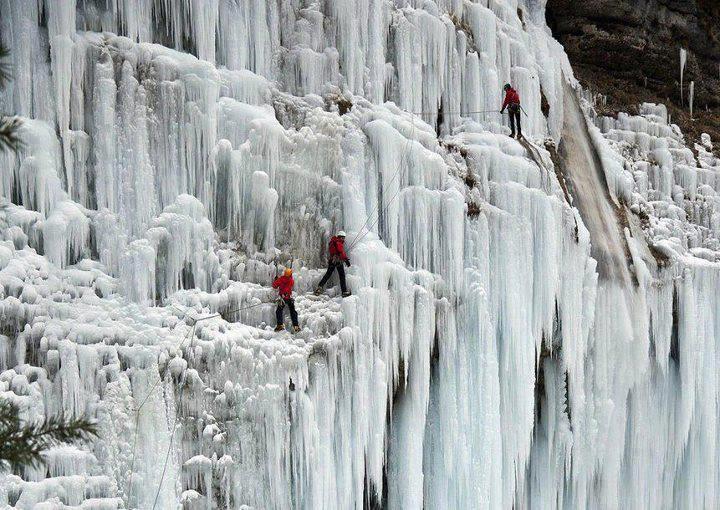
So, I start out doing an “impossible” task, one I’ve never
done, have no familiarity or seeming aptitude for and hence feel supremely uncomfortable in the approach. It’s a task I have never
attempted out of decades of deep seated fear and layers of complex beliefs. But, my mind knows it has to be done, there is
no not doing it. My body is sort of
curious about this new never-been-done-before quest and is somewhat willing
because it is supported by the determined mind. The
emotional center of myself is fully crazed about the prospect, has dug in her heels
and can be heard whining about it almost constantly, nay-saying and
dooms-daying as we start to move through the steps of the task. Normally, all the ruckus the emotions create
would stop the rest of me in my tracks.
But the methodical mind is on a roll.
And wisely, she hasn’t taken her usual imperious stance, dominating the
rest of me. She takes a wise-parent
approach and this makes all the difference.
She keeps moving forward doing the laid out steps (with the help of the
able and curious body), while cajoling the emotional part. “We’re just going to do this for three hours
today, it might be sort of fun. We’ll make no determinations, we’re just trying
an experiment.”
 |
| photo credit: Sterni |
The three hours experience
could be likened to dragging a full cart with no wheels. It is like a flailing child on my left hip, causing me to do a sort of Igor/Frankenstein walk, dragging this
besides-herself-little-one clinging, kicking and screaming. There is a general feeling of supreme
discomfort, even pain. Confusion sets in
in increments and I have an impression of being on the deck of a boat on a rolling ocean. Something in me knows the confusions and overwhelm are part and parcel of the
effort and not to spend too much time trying to unravel them. Parts of
myself are internally cowering, pretending they are stupid and don’t know
anything. This “I don’t know anything!”
drama I find is actually helpful; my past indoctrination says, when you are a rank novice at something, mistakes are allowed, mercy is shown, the boom
doesn’t get lowered. Wow! It’s ok not to
know.
The three hours are up, I pack ‘us’ into the car. There is a visceral sensation I am all in pieces,
kind of shredded, and the main impression I have of myself. I do a lot of inner cooing and reassuring on the way home,
actually talking aloud: “Ok. THATS over. We’re done
for the day, on our way home now. We did great! We’ll
have some nice tea when we get there and take the rest of the day off. We won’t think or do anything else about this for now.” Something in me is dutiful to this; faintly
tempted to consider doing some thinking work on the process, she just lets it
go. There would be time for this action in
awhile when most of me was feeling more settled, less shredded.
 |
| photo credit: Barbara Corvine |
There are a lot of edges in this. Not only the ‘impossible’ task at the center,
but experiencing the emotional dramas of the small child that still lives and her bounty of extreme impressions and reactions. Also, the benevolent parent who
somehow doesn’t marginalize the wailing child, but just keeps moving forward with a type of empathy for the
fear-ridden. That there were beginnings,
middles and definite ends in the steps was enormously helpful; it provided lampposts (a short term goal) to get to and complete. The practice of doing this exercise multiple
times was great for the whole, because they all came to know it was survivable. We would get through this, we did it before. Each time, a new step became a bit more detailed and
“serious”. Each time newish
terrors would surface, the intimidation factor would become more heightened. And each time the benevolent parent would rise
to the occasion, “It’s ok. We can do this.
It is terrifying. We’re in
this together.”
Part of meeting and transforming this edge was not getting
bogged down in the smokescreens other parts of the self would create (the usual “turn away”
factor). They were noted, sometimes
momentarily overwhelming, but not distracting enough to derail the intention
set. The presence of someone
compassionate and benevolent, not willing to annihilate the ruckus-causing
parts for her own purposes was also very unifying. A sense even the disruptive have a place in the process, a voice to be recognized, a value-- significantly diffuses the power of the ensuing polarized anarchy. It was a joint effort, no Lone Ranger in
sight.
Possibly, the transformation of an edge
is a rite of passage. There is no doubt it is entering a crucible of sorts; there is a combustible incineration process, pain and suffering is guaranteed. But the sense of liberation and the infusion of a clear, bright energy once one has stepped through that door is an experience of tasting the magnificence of being Alive. Once done, the possibility of navigating the course of an edge undeniably exists. It is also gives a perspective that illusions abound and confirms I may be living much of my life behind a veil.

Saturday, September 22, 2012
Resiliency
 |
| Etching by CJ McGannon |
Our beings, on the long life trek we make in this existence, are models of a tremendous resiliency. The ability to sustain and survive the small and large nicks and breaks to our hearts, bodies, psychs, souls and minds endured over a lifetime is just short of miraculous. A broken heart, a catastrophic accident, traumatic events, repeated loss, soul numbing extended misery circumstances-- how is it we don't die a million times over with the suffering and pain this life provides us on almost a continual basis?
Resiliency. The body alone is a wonderful example of responsive rebound. The body's design, from its replicating cells to its innate protection properties irrepressibly urges: "Live!" Vital organs are protected by bony prominences. The ever mobile joints are useful and guarded by their artistically layered ligaments, tendons and fascia and well oiled by the buoyant, slippery synovial fluid. Who could imagine twenty eight feet of intestine would be useful crammed into half of the torso's relatively small cavity? And yet it is useful; brilliantly. Incredible. And the tremendous cooperative symphony this complex organism creates between the parts, harmonizing the whole, whether it be useful bacteria in the mouth/saliva jump-starting the digestion process (actually initiated in the use of the eyes, nose and brain) or the pumping action of the heart in concert with respiration. When something goes awry in one aspect of the body's function, there is a usually graceful accepting of the workload by another aspect. The spleen, liver, pancreas and kidneys all function in some capacity to filter toxins from the blood. If the spleen is removed the pancreas and liver pick up on the function of the missing spleen's work. Sometimes it is seamless, sometimes it is a dysfunctional undertaking. But the body is a community and in relationship to its parts. And most of all, because of this relationship, it is tremendously resilient.
 |
| The Three Shades, Rodin* |
Even though we are programmed from the get go to move toward death, dying can be a difficult business; the collective body doesn't want to do it, even when it is unbearably tired of the struggle. We have this incredible resiliency, life force that streams through us resisting capitulation with a universal energy. Our being is made to struggle, overcome, or at least to die trying. And even in the process of the inevitable surrender of the body to the dying process, quite often resiliency is seen as the Spirit takes over this urge to live and adapts. Again, one area in the community of the self fails, lets go; another part picks up the "life" action and becomes resilient, and rebounds. Amazing. This sophisticated organism we inhabit is a finely tuned orchestra; layered, complex and multifaceted, even when it is at its most dilapidated. From this point of view, it's hard to imagine that the spirit doesn't transcend the body post mortem.
Honoring this meta collective aspect of the divine in us seems mandatory.
Saturday, September 15, 2012
Resistance
 |
| photo: Irene Becker |
"Where in myself" is another direction. It drops me down into a deeper layer of the possibility of an understanding and the unknown that is resisting. It is not a question to ruminate on (although that temptation is ever present). It's a question that begs for more of me to be present with it. It begs to just Be. There is rarely a cognitive response to "where", but a more fuller experience that unfolds if one can stay with it. The problem is I don't stay with it. Once the window of the the walk I am resisting has closed, I go on to the next thing. Or after the initial dismissing of the advice has transpired, I move on. What is of value in resistance is the staying with it in a fuller, experiential way.

Who in me resists? And who asks that question?
I am not as willing (I have resistance?) as I was to assume self-deprecatingly that it is the automatic, lazy, "sleeping", fearful or weak self that resists. It would be superficial, partial and truly automatic to maintain that position. This organism is dimensional. How could I possibly know this if I limit the interest I have of it to trite write-offs. Yes, it is automatic. Yes, it often takes the path of least resistance. And yes, a part of me is absolutely unforgiving of that. It is this lack of forgiveness, the propensity to judge she who resists that keeps the bigger understandings from me. There is no room for the scary black hole to emerge, the "where in me" questions to exist.
Often in the healing moment working with others, there is a palpable trace of resistance present; of the next action to take, or comment to say. It is powerful. It is potent. It is a moment full of energy. The middle ground. The Unknown. The moment of resistance brings me back to the present and what Is. I have come to fully respect the resistance that can be occasionally present in another. The energy of the healing wants to move forward, but there is resistance. The client is not ready, the client is fearful. So, let it be. In the holding of that, there is plenty of worthiness to be had. It is not a missed opportunity. Everything in its own time. Resistance is to be respected if for no other reason that it is a voice needing to be heard.

Subscribe to:
Posts (Atom)